Nicole Schabus (Law Professor, Thompson Rivers University, in Secwepemc’ulecw the territory of the Secwepemc People)
The international legal framework substantiating the points set out above about Indigenous Peoples being recognized as decision-makers has been built over several decades, almost a century.
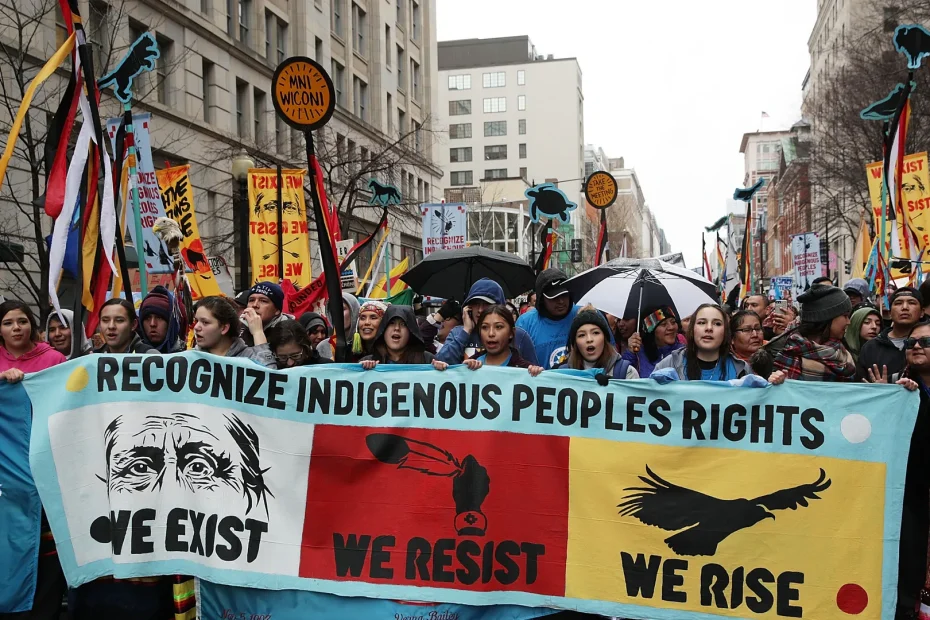
The push for Indigenous Peoples to have their standing recognized at international law is well documented. It goes back more than 50 years in current international processes and 100 years in previous ones. This year marks the 100th anniversary of a Haudenosaunee delegation seeking standing at the League of Nations between the two world wars[1]. During that time other indigenous delegations, especially from North America also took their grievances at the international level. In the case of Canada, this resulted in a prohibition on organizing around Indigenous land rights being introduced into the Indian Act[2]. The Act foresaw serious penalties, including disbarment in the case of lawyers working for Indigenous Peoples on these issues. Once the ban was lifted, Indigenous Peoples needed some time to reorganize, especially in light of national assimilationist policies, such as the White Paper proposed by the government of Pierre Elliott Trudeau in 1969. This is the year that the Union of British Columbia Indian Chiefs was founded, followed by the creation of national indigenous organizations, such as the National Indian Brotherhood, now the Assembly of First Nations.
Secwepemc leader George Manuel became one of the first national Chiefs to attend the UN Conference on the Human Environment in 1972 in Stockholm, Sweden[3]. This important moment in modern international environmental law coincided with the emergence of an international pan-Indigenous movement pushing for recognition of Indigenous Peoples and their rights. Manuel traveled from Stockholm to Sami territory and, together with their leaders and Indigenous leaders from around the world, within three years founded the first modern pan-indigenous international organization, the World Council of Indigenous Peoples (WCIP)[4]. The WCIP Founding Conference, held in 1975 at Port Alberni, British Columbia, Canada, issued the Solemn Declaration, where, among other things, the leaders agreed to use “Indigenous Peoples” as the overarching international term to refer to themselves, to also make it clear that they have standing as Peoples under international law[5]. They also vowed to bring their demands to the United Nations (UN). From the second WCIP Conference in 1977, at Kiruna, Sapmi, Sweden, Indigenous leaders traveled to the first “International Conference on Discrimination against Indigenous Populations in the Americas”, held in September 1977 at the UN in Geneva, Switzerland.. One of its outcomes was the UN Study on the Problem of Discrimination against Indigenous Populations, which became known as the Martinez Cobo report[6]. From this report flowed the establishment of the first UN body on Indigenous Peoples, the UN Working Group on Indigenous Populations (UN WGIP).
The name of the Working Group referred to populations rather than to Indigenous Peoples, because some nation states, especially settler colonial states, disputed their standing as “peoples” under international law. This became the most contentious issue in the development of the UN Declaration on the Rights of Indigenous Peoples (UNDRIP)[7]. While the UN WGIP began deliberations on it right away, it was eventually adopted in 2007, becoming the longest negotiated UN human rights instrument.
The opposition to Indigenous Peoples’ standing under international law was already ludicrous at the time of establishment of the UN WGIP, since the right to self-determination of all peoples had been written into the so-called decolonization covenants: the International Covenant on Civil and Political Rights (ICCPR)[8] and the International Covenant on Economic, Social and Cultural Rights (ICESCR)[9]. The two covenants share the same overarching provision on self-determination. Article 1.1 of both covenants states that: “All peoples have the right of self-determination. By virtue of that right they freely determine their political status and freely pursue their economic, social and cultural development”.
The two covenants were adopted by way of a UN General Assembly (UNGA) resolution in 1966 and entered into force in 1976, ratified by the vast majority of nation states. The right to self-determination was considered a remedy to colonization. No Peoples have ever been in greater need of this remedy than Indigenous Peoples and the covenants’ provision was ultimately mirrored in UNDRIP Article 3. Finally adopted by the UN General Assembly on September 13, 2007, UNDRIP confirmed that the right to self-determination applies to Indigenous Peoples.
Already at the time of UNDRIP’s negotiation, some argued that the right to self-determination of Indigenous Peoples formed part of customary international law.[10] A clear consensus of the international community has since emerged in endorsing UNDRIP, with no nation-state remaining opposed to it. At the time of adoption, only four settler colonial states, Australia, Canada, New Zealand and the US, voted against it, and have since reversed their position. There is thus no more room left to deny the applicability of the right to self-determination to Indigenous Peoples by way of customary international law. The criteria for customary international law are met: opinio iuris, meaning the belief that it constitutes law, as evidenced by the vote; and state practice, as documented by numerous implementation bills, from Bolivia to Canada, and other implementation measures around the globe.
In addition, UNDRIP sets out many of the manifestations of the right to self-determination and specific indigenous rights, most of which have a collective dimension. This is something that distinguishes them from other rights set out in many human rights instruments, which often focus on an individual dimension. Civil and political rights in particular are often described as first and second generations of rights, flowing out of European/Western schools of thought and focusing on the individual. Third generation rights, including economic, social and cultural rights, often have a more collective dimension, which liberal schools of thought struggle more with conceptualizing, and which have yet to be more broadly established.
Conceptualization of the third generation of rights may learn a lot from Indigenous Peoples and their legal traditions and philosophies, which are deeply rooted in collective dimensions, including relating with nature in an animate way. In this sense, Western traditions are just starting to “catch up” by talking about rights of nature. It is noteworthy that it was Indigenous Peoples that brought the initial judicial cases supporting rights of nature, since these concepts are clearer in indigenous laws and legal traditions. Similarly, other huge limitations of Western human rights conceptualizations when it comes to environmental protection concern the overall rights framework in itself, and the provision for justification of violation of human rights. In contrast, many indigenous laws and legal traditions carry much clearer concepts of obligations to protect land and water.

Multilateral Environmental Agreements and the UN Convention on Biological Diversity
Indigenous Peoples were actively involved in the lead-up to and in the Earth Summit, held in 1992 in Rio de Janeiro, Brazil[11], including in the negotiation and adoption of the Convention on Biological Diversity (CBD). One of the three Rio Conventions, along the UN Framework Convention on Climate Change (UNFCCC) and the UN Convention to Combat Desertification (UNCCD), the CBD has recognized the important role Indigenous Peoples play in the conservation and sustainable use of biodiversity and that they should receive related benefits, including those arising from the use of their knowledge and genetic resources.
In comparison to other multilateral environmental agreements and especially the other Rio Conventions, CBD processes have involved Indigenous Peoples and have considered their biodiversity-related knowledge from the outset. In contrast, the UNFCCC processes have not fully integrated traditional or Indigenous knowledge. This is reflected in weak language in the Paris Agreement,[12] which, in its preamble, fails to acknowledge the key role that the knowledge, innovations and practices of Indigenous Peoples and local communities already play in terms of environmental protection and conservation and for that matter mitigation of and adaptation to climate change, and the need to further integrate it in ongoing processes. The only substantive reference to traditional knowledge in the Paris Agreement is where parties acknowledge that it should guide adaptation activities as appropriate[13]. This could be seen as rather patronizing and disappointing more than two decades after the entry into force of the UNFCCC and in light of the high level of indigenous participation and the active role Indigenous Peoples and local communities play in combating climate change on the ground.
In comparison, the CBD acknowledges the key role traditional knowledge can play in protecting and enhancing biological diversity. In this section, I will first discuss some of the CBD processes engaging Indigenous Peoples and then some of the key instruments relating to traditional knowledge, including the Akwé: Kon Guidelines on impact assessments[14]; the Tkarihwaié:ri Code of Ethical Conduct on cultural and intellectual heritage;[15] and the Nagoya Protocol on Access to Genetic Resources and Benefit-sharing (ABS).[16]
Already at early CBD Conferences of the Parties (COP) and meetings of the CBD Subsidiary Body on Technical and Technological Advice (SBSTTA), broad indigenous participation ensured that there was substantive discussion on implementation of CBD Article 8(j) on traditional knowledge[17], including development of a work programme. Early proposals further called for the establishment of a Working Group on the issue.[18] In 1998, Parties established the CBD Ad Hoc Open-ended Inter-Sessional Working Group on Article 8(j) and Related Provisions calling for, inter alia: the widest representation possible from indigenous and local communities; short- and medium-term work programmes; and application for observer status to and development of a memorandum of understanding with the World Intellectual Property Organization (WIPO).[19]
The Working Group on Article 8(j) emerged as a forum ensuring increased participation by Indigenous Peoples. At its meetings, Indigenous Peoples were participating on a similar footing as states, being added to the speakers list at the same order as states. Gradually, indigenous representatives were added to the Bureau meetings and served as Co-Chairs of the discussions in the Working Group. A practice also emerged that indigenous representatives could table proposals for the wording of recommendations – a right which is generally reserved for state parties – although states remained the only ones to decide.[20] This practice created controversies during the negotiations that eventually resulted in the Nagoya Protocol on ABS, when the two CBD Working Groups on ABS and on Article 8(j) had to interact. With some countries insisting then that only state parties could make textual proposals to be discussed during the negotiations, the practice was reversed, and the rule now is that proposals by indigenous representatives have to be endorsed by states in order to be discussed.[21]
Arguably the most important development has occurred in regard to the third CBD objective, fair and equitable sharing of the benefits arising from the utilization of genetic resources. With the adoption of the legally-binding Nagoya Protocol on ABS, traditional knowledge and associated genetic resources can only be accessed with the prior informed consent of Indigenous Peoples and local communities, ensuring in turn, if such access is authorized, fair and equitable sharing of benefits. It is appropriate to describe the Nagoya Protocol as the ‘first multilateral environmental agreement containing substantive provisions on environmental human rights’,[22] indigenous rights I would specify.
Although the Nagoya Protocol has a specific focus on the utilization of genetic resources, it provides a good start for the development of legally binding standards regarding ABS. There is an intrinsic link between traditional knowledge and genetic resources, recognized in the preamble of the Nagoya Protocol, which notes that the two are inseparable for Indigenous Peoples.[23] Acknowledging how intricately linked traditional knowledge is to the territories, lands and waters traditionally used and occupied by Indigenous Peoples, the Nagoya Protocol provisions can be used as a first step to build out from and implement broader concepts of indigenous territorial governance and control over access to their lands and all their resources. Similarly, traditional knowledge, unless it is already in the public domain, is clearly under the direct control of Indigenous Peoples and hence one of the areas where they already directly control access. When it comes to access to traditional knowledge therefore, it is hard to deny that their prior informed consent is required. Furthermore, as Gurdial Singh Nijar correctly points out: ‘Nowhere does the CBD—and now the Protocol—say that TK that is publicly available or publicly known is not subject to prior informed consent and mutually agreed terms’.[24] So prior informed consent would still be required in those circumstances. In addition, Indigenous Peoples have in some cases used materials in the public domain, for example recorded stories, to extract indigenous laws and knowledge, which in turn they have used in the governance of their lands and resources.
In conclusion, it can be argued that the CBD has provided an unprecedented space for indigenous participation in multilateral environmental processes, further strengthening the role, position and rights of Indigenous Peoples as actors or subjects, rather than objects of international law.[25]
[1] https://www.cbc.ca/news/indigenous/deskaheh-100-haudenosaunee-geneva-1.6913959
[2] Mathias, Joe and Yabsely, Gary: conspiracy of Legislation, the Suppression of Indian Rights in Canada, BC Studies, No. 89, Spring 1991, pp. 34
[3] Recio, Eugenia and Hestad, Dina: Indigenous Peoples Defending an Environment for All, April 2022, IISD Policy Brief
[4] Sanders, Douglas: The Formation of the World Council of Indigenous Peoples, IWGIA Document 29, Copenhagen, 1977
[5] Sanders, Douglas: Indigenous Peoples: Issues of Definition, 8 IJCP 4, 1999
[6] Martinez Cobo, Jose: UN Study on the Problem of Discrimination against Indigenous Populations, 1981
[7] UN Declaration on the Rights of Indigenous Peoples, Official Records of the General Assembly, Sixty-first Session, Supplement No. 53 (A/61/53), part one, chap. II, sect. A. (2007)
[8] International Covenant on Civil and Political Rights, GA res. 2200A (XXI), 21 UN GAOR Supp. (No. 16) at 52, UN Doc. A/6316 (1966); 999 UNTS 171; 6 ILM 368 (1967)
[9] International Covenant on Economic, Social and Cultural Rights, GA res. 2200A (XXI), 21 UN GAOR Supp. (No. 16) at 49, UN Doc. A/6316 (1966); 993 UNTS 3; 6 ILM 368 (1967)
[10] Anaya James: International Human Rights and Indigenous Peoples, Wolters Kluwer, 2009
[11] Kari-Oca Declaration to the United Nations Conference on Environment and Development (UNCED) Rio, 1992.
[12] UN Framework Convention on Climate Change, Paris Agreement (FCCC/CP/2015/L.9/Rev.1), preamble 136.
[14] Secretariat of the Convention on Biological Diversity, Akwé: Kon Voluntary Guidelines for the Conduct of Cultural, Environmental and Social Impact Assessment regarding Developments Proposed to Take Place on, or which are Likely to Impact on, Sacred Sites and on Lands and Waters Traditionally Occupied or Used by Indigenous and Local Communities (2004 Montreal CBD Guidelines Series).
[15] Secretariat of the Convention on Biological Diversity, Tkarihwaié:ri Code of Ethical Conduct to Ensure Respect for the Cultural and Intellectual Heritage of Indigenous and Local Communities Relevant to the Conservation and Sustainable Use of Biological Diversity (2011 Montreal)
[16] Nagoya Protocol on Access to Genetic Resources and the Fair and Equitable Sharing of Benefits Arising from their Utilization to the Convention on Biological Diversity (adopted 29 October 2010, entered into force 12 October 2014) (Nagoya Protocol). See Chapter 17 in this volume.
[17] CBD Article 8(j) reads: “Each Contracting Party shall, as far as possible and as appropriate: … Subject to its national legislation, respect, preserve and maintain knowledge, innovations and practices of indigenous and local communities embodying traditional lifestyles relevant for the conservation and sustainable use of biological diversity and promote their wider application with the approval and involvement of the holders of such knowledge, innovations and practices and encourage the equitable sharing of the benefits arising from the utilization of such knowledge, innovations and practices”.
[18] IISD, ‘Earth Negotiations Bulletin, Summary of the Third Conference of the Parties to the Convention on Biological Diversity: 4–15 November 1996’, Vol. 9 No. 65, 18 November 1996
[20] Indigenous Peoples Council on Biocolonialism (IPCB) submission to the International Expert Group Meeting on the Convention on Biological Diversity’s International Regime on Access and Benefit-sharing and Indigenous Peoples Human Rights held in New York, 17–19 January 2007.
[21] IISD, ‘Earth Negotiations Bulletin, Summary of the Eighth Conference of the Parties to the Convention on Biological Diversity: 20–31 March 2006’, Vol. 9 No. 363, 3 April 2006
[22] Morgera, Elisa: Against All Odds: The Contribution of the Convention on Biological Diversity to International Human Rights Law; in D Alland and others (eds), Unité et Diversité du Droit International/Unity and Diversity of International Law (Martinus Nijhoff 2014)
[23] Nagoya Protocol preamble.
[24] Nijar, Gurdial: Incorporating Traditional Knowledge in an International Regime on Access to Genetic Resources and Benefit Sharing: Problem and Prospects (2010) 21 EJIL 461; 1210
[25] Barsh R, ‘Indigenous Peoples in the 1990s: From Object to Subject of International Law?’ (1994) 7 Harv Hum Rts J 33.